
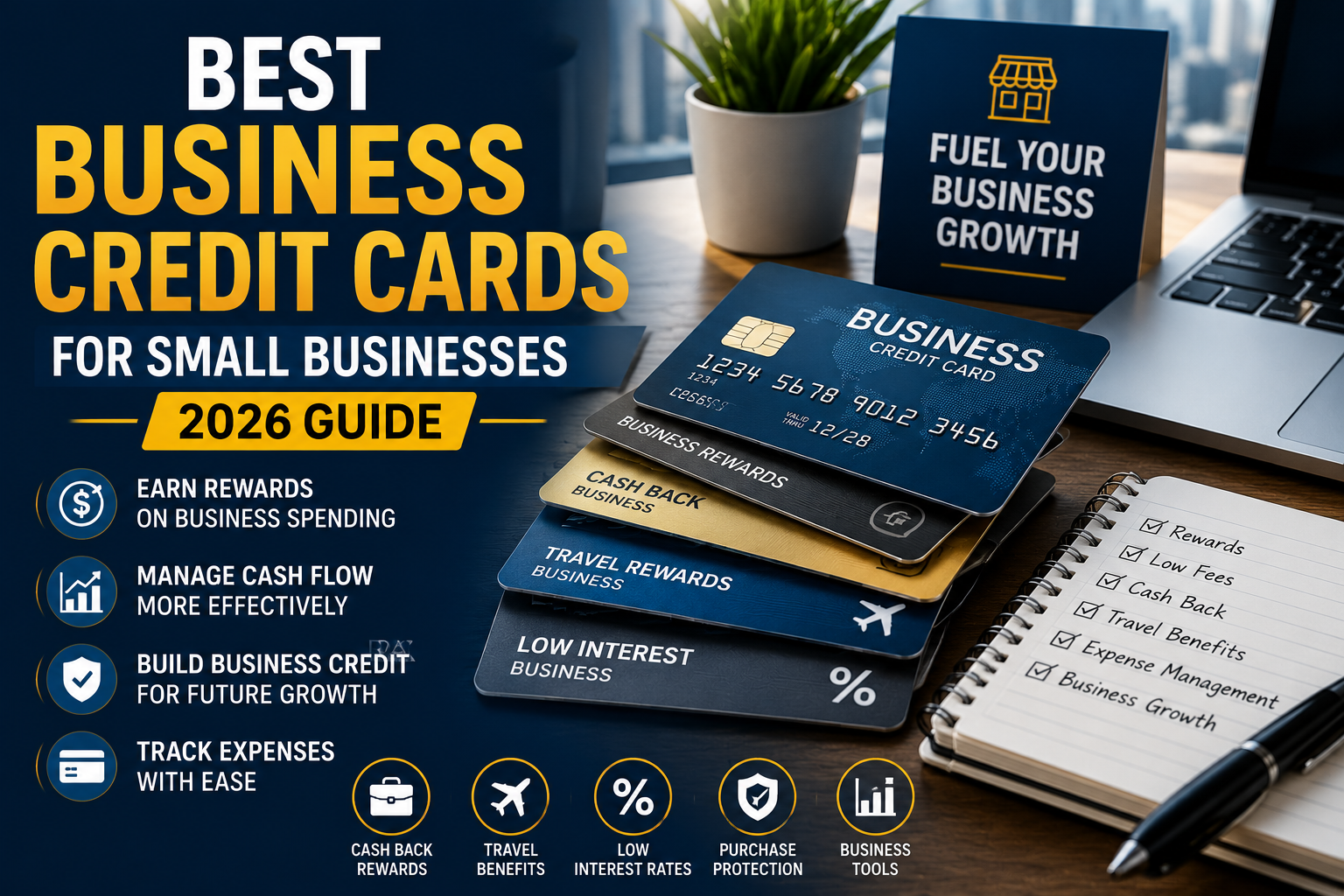
Running a small business often requires careful cash flow management, strategic spending, and access to financial tools that support growth. One of the most commonly used financial tools among entrepreneurs is a business credit card. When used responsibly, a business credit card can help manage expenses, track purchases, earn rewards, and build business credit.
With numerous options available in 2026, selecting the right business credit card depends on your company’s spending habits, financial goals, and operational needs. This guide explores some of the most popular categories and features that small business owners should consider when evaluating business credit cards.
Why Small Businesses Use Business Credit Cards
Business credit cards offer several advantages beyond simple payment convenience.
Potential benefits may include:
- Expense tracking and reporting
- Rewards programs
- Travel benefits
- Employee spending controls
- Fraud protection features
- Cash flow flexibility
- Business credit building opportunities
For many companies, separating personal and business expenses can also simplify bookkeeping and tax preparation.
Features to Consider Before Choosing a Card
Not all business credit cards are designed for the same type of business. Before applying, business owners should evaluate several important factors.
Rewards Structure
Many cards offer rewards based on spending categories.
Common reward categories include:
- Office supplies
- Advertising expenses
- Travel purchases
- Internet and software services
- Fuel purchases
- Dining expenses
Businesses should compare rewards programs with their actual spending patterns.
Annual Fees
Some premium cards charge annual fees while offering enhanced benefits and rewards.
Before selecting a card, consider whether the value of benefits outweighs the annual cost.
Interest Rates
If balances may occasionally be carried from month to month, interest rates become an important factor.
Businesses that regularly pay balances in full may place greater emphasis on rewards and features instead of interest rates.
Employee Cards
Many business credit cards allow authorized employee cards with spending limits and reporting tools.
These features can improve expense management while maintaining financial oversight.
Expense Management Tools
Modern business credit cards often include:
- Digital expense tracking
- Spending reports
- Accounting software integrations
- Mobile account management
- Real-time purchase notifications
These tools can save valuable administrative time.
Popular Business Credit Card Categories
Cashback Business Cards
Cashback cards remain popular among small businesses because rewards are easy to understand and redeem.
These cards may be suitable for:
- Retail businesses
- Service providers
- Local businesses
- Freelancers
Travel Rewards Cards
Businesses that frequently travel may benefit from travel-focused rewards cards.
Potential benefits include:
- Airline rewards
- Hotel points
- Airport lounge access
- Travel insurance features
- Global payment flexibility
Low-Interest Business Cards
Some businesses prioritize lower borrowing costs rather than rewards.
Low-interest cards may appeal to companies seeking additional flexibility for managing short-term expenses.
Startup-Friendly Cards
New businesses sometimes face challenges qualifying for traditional financing.
Certain card programs are designed specifically for startups and newer companies that may have limited business credit history.
Best Practices for Responsible Credit Card Use
A business credit card can be a valuable financial tool when used responsibly.
Recommended practices include:
Pay Balances on Time
Consistent on-time payments can help maintain strong financial standing and potentially support business credit development.
Monitor Spending Regularly
Reviewing transactions frequently helps identify unauthorized purchases and ensures expenses remain within budget.
Separate Personal and Business Expenses
Maintaining clear separation between personal and company spending improves financial organization and reporting.
Avoid Excessive Debt
Credit cards should support business operations rather than create long-term financial strain.
Businesses should carefully evaluate repayment capabilities before making large purchases.
Building Business Credit
Many entrepreneurs use business credit cards as part of a broader strategy to establish business credit history.
Strong credit profiles may potentially support future access to:
- Business loans
- Equipment financing
- Vendor credit arrangements
- Commercial financing opportunities
Building credit often requires consistent financial management over time.
Final Thoughts
The best business credit card for a small business in 2026 depends largely on individual business goals, spending patterns, and financial priorities. Some companies may prioritize cashback rewards, while others may value travel benefits, expense management tools, or lower borrowing costs.
Before selecting a card, compare fees, rewards programs, interest rates, and account features carefully. Taking the time to evaluate available options can help businesses choose a financial tool that supports long-term growth and operational efficiency.
Best Business Credit Cards for Small Businesses in 2026
Running a small business often requires careful cash flow management, strategic spending, and access to financial tools that support growth. One of the most commonly used financial tools among entrepreneurs is a business credit card. When used responsibly, a business credit card can help manage expenses, track purchases, earn rewards, and build business credit.
With numerous options available in 2026, selecting the right business credit card depends on your company’s spending habits, financial goals, and operational needs. This guide explores some of the most popular categories and features that small business owners should consider when evaluating business credit cards.
Why Small Businesses Use Business Credit Cards
Business credit cards offer several advantages beyond simple payment convenience.
Potential benefits may include:
- Expense tracking and reporting
- Rewards programs
- Travel benefits
- Employee spending controls
- Fraud protection features
- Cash flow flexibility
- Business credit building opportunities
For many companies, separating personal and business expenses can also simplify bookkeeping and tax preparation.
Features to Consider Before Choosing a Card
Not all business credit cards are designed for the same type of business. Before applying, business owners should evaluate several important factors.
Rewards Structure
Many cards offer rewards based on spending categories.
Common reward categories include:
- Office supplies
- Advertising expenses
- Travel purchases
- Internet and software services
- Fuel purchases
- Dining expenses
Businesses should compare rewards programs with their actual spending patterns.
Annual Fees
Some premium cards charge annual fees while offering enhanced benefits and rewards.
Before selecting a card, consider whether the value of benefits outweighs the annual cost.
Interest Rates
If balances may occasionally be carried from month to month, interest rates become an important factor.
Businesses that regularly pay balances in full may place greater emphasis on rewards and features instead of interest rates.
Employee Cards
Many business credit cards allow authorized employee cards with spending limits and reporting tools.
These features can improve expense management while maintaining financial oversight.
Expense Management Tools
Modern business credit cards often include:
- Digital expense tracking
- Spending reports
- Accounting software integrations
- Mobile account management
- Real-time purchase notifications
These tools can save valuable administrative time.
Popular Business Credit Card Categories
Cashback Business Cards
Cashback cards remain popular among small businesses because rewards are easy to understand and redeem.
These cards may be suitable for:
- Retail businesses
- Service providers
- Local businesses
- Freelancers
Travel Rewards Cards
Businesses that frequently travel may benefit from travel-focused rewards cards.
Potential benefits include:
- Airline rewards
- Hotel points
- Airport lounge access
- Travel insurance features
- Global payment flexibility
Low-Interest Business Cards
Some businesses prioritize lower borrowing costs rather than rewards.
Low-interest cards may appeal to companies seeking additional flexibility for managing short-term expenses.
Startup-Friendly Cards
New businesses sometimes face challenges qualifying for traditional financing.
Certain card programs are designed specifically for startups and newer companies that may have limited business credit history.
Best Practices for Responsible Credit Card Use
A business credit card can be a valuable financial tool when used responsibly.
Recommended practices include:
Pay Balances on Time
Consistent on-time payments can help maintain strong financial standing and potentially support business credit development.
Monitor Spending Regularly
Reviewing transactions frequently helps identify unauthorized purchases and ensures expenses remain within budget.
Separate Personal and Business Expenses
Maintaining clear separation between personal and company spending improves financial organization and reporting.
Avoid Excessive Debt
Credit cards should support business operations rather than create long-term financial strain.
Businesses should carefully evaluate repayment capabilities before making large purchases.
Building Business Credit
Many entrepreneurs use business credit cards as part of a broader strategy to establish business credit history.
Strong credit profiles may potentially support future access to:
- Business loans
- Equipment financing
- Vendor credit arrangements
- Commercial financing opportunities
Building credit often requires consistent financial management over time.
Final Thoughts
The best business credit card for a small business in 2026 depends largely on individual business goals, spending patterns, and financial priorities. Some companies may prioritize cashback rewards, while others may value travel benefits, expense management tools, or lower borrowing costs.
Before selecting a card, compare fees, rewards programs, interest rates, and account features carefully. Taking the time to evaluate available options can help businesses choose a financial tool that supports long-term growth and operational efficiency.
Disclaimer
This article is provided for informational and educational purposes only and should not be considered financial, banking, credit, tax, legal, or investment advice. Credit card features, eligibility requirements, rewards programs, fees, interest rates, and terms may change without notice and vary by issuer. Readers should conduct independent research and consult qualified financial professionals before applying for any financial product. This article does not endorse, recommend, or guarantee any specific credit card, lender, issuer, or financial outcome. Approval decisions are determined solely by financial institutions based on their own criteria and applicable regulations.