
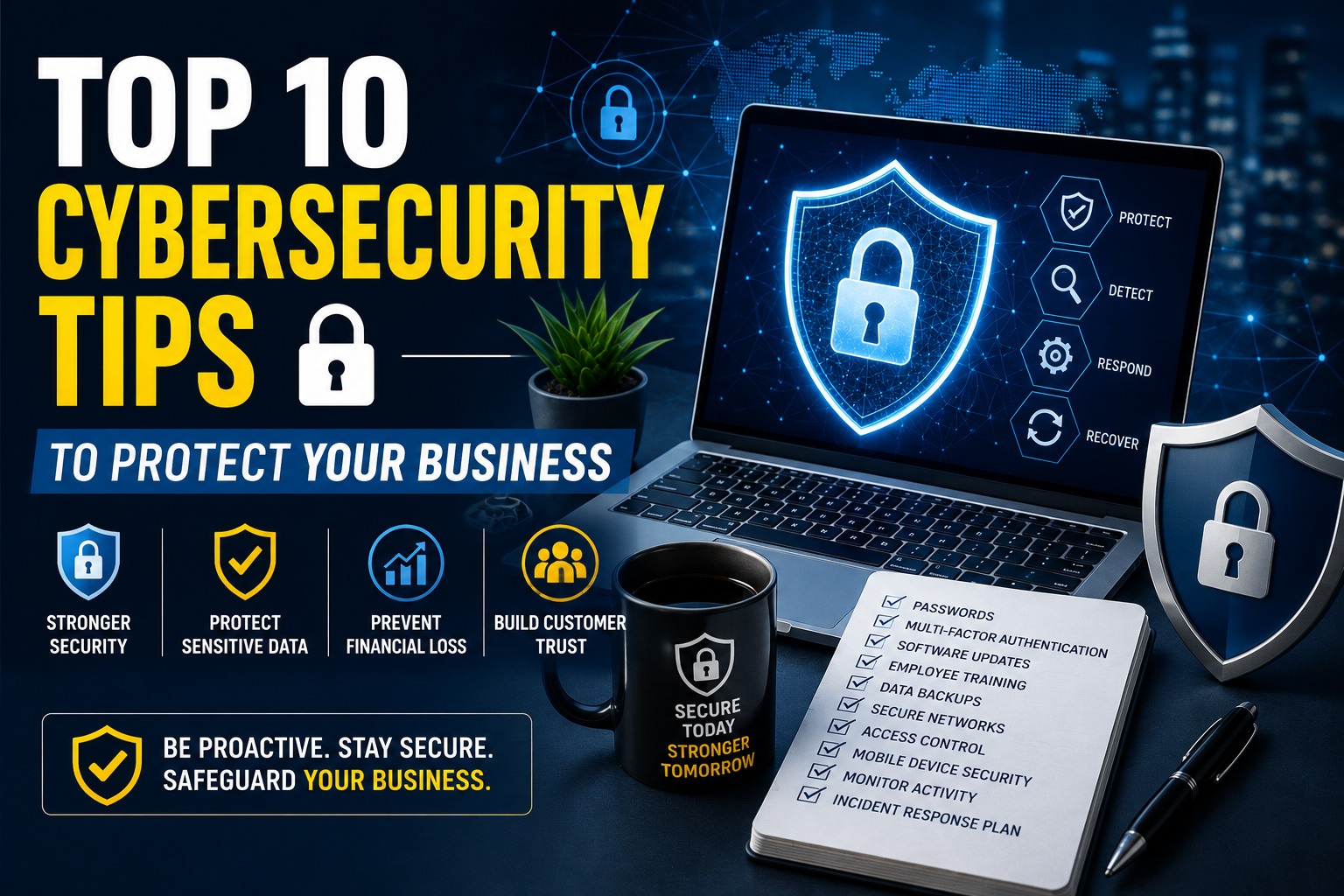
Cybersecurity has become a critical concern for businesses of all sizes. As technology continues to evolve, cybercriminals are constantly developing new methods to target organizations, steal sensitive data, and disrupt operations. Small and medium-sized businesses are particularly attractive targets because they often have fewer security resources than large corporations.
Fortunately, many cybersecurity risks can be reduced through proactive planning and responsible security practices. The following cybersecurity tips can help businesses strengthen their defenses and reduce exposure to common threats.
1. Use Strong and Unique Passwords
Weak passwords remain one of the most common causes of security breaches. Businesses should encourage employees to create strong passwords that include a combination of letters, numbers, and special characters.
Best practices include:
- Avoiding easily guessed words
- Using unique passwords for each account
- Regularly updating passwords
- Utilizing password management tools when appropriate
Strong password habits can significantly reduce unauthorized access risks.
2. Enable Multi-Factor Authentication (MFA)
Multi-factor authentication adds an additional layer of security beyond a password.
With MFA enabled, users may need to verify their identity using:
- Mobile authentication apps
- Security keys
- SMS verification codes
- Biometric authentication
Even if a password becomes compromised, MFA can help prevent unauthorized access.
3. Keep Software Updated
Software updates often include security patches that address known vulnerabilities.
Businesses should regularly update:
- Operating systems
- Web browsers
- Business applications
- Security software
- Mobile devices
Delaying updates can leave systems exposed to known threats.
4. Train Employees on Cybersecurity Awareness
Human error remains one of the leading causes of security incidents.
Employee training should cover topics such as:
- Phishing awareness
- Safe internet browsing
- Suspicious email identification
- Password security
- Data handling procedures
Well-informed employees can serve as an important line of defense.
5. Regularly Back Up Critical Data
Data backups help businesses recover more quickly from unexpected incidents.
Important data should be backed up:
- Frequently
- Securely
- In multiple locations when possible
Organizations should also periodically test backups to verify recovery capabilities.
6. Secure Business Networks
Business networks should be properly configured and protected.
Recommended measures include:
- Using secure Wi-Fi encryption
- Changing default router credentials
- Limiting unnecessary network access
- Monitoring connected devices
Network security plays a vital role in protecting company resources.
7. Control Access to Sensitive Information
Not every employee requires access to all company data.
Businesses can improve security by:
- Applying role-based access controls
- Limiting administrative privileges
- Reviewing access permissions regularly
- Removing access for former employees promptly
Restricting access helps reduce internal and external risks.
8. Protect Mobile Devices
Mobile phones, tablets, and laptops often contain sensitive business information.
Protective measures may include:
- Device encryption
- Screen lock requirements
- Remote wipe capabilities
- Security software installation
Mobile device security is increasingly important as remote work remains common.
9. Monitor Systems for Unusual Activity
Early detection can help minimize the impact of security incidents.
Businesses should monitor:
- Login attempts
- Network traffic
- User activity
- Security alerts
- System performance
Prompt investigation of unusual activity can help identify potential threats before they escalate.
10. Develop an Incident Response Plan
Even organizations with strong security measures can experience incidents.
An incident response plan should outline:
- Roles and responsibilities
- Communication procedures
- Recovery processes
- Reporting requirements
- Business continuity measures
Preparation can help businesses respond more effectively when unexpected events occur.
Why Cybersecurity Matters More Than Ever
Cybersecurity is not solely an IT issue—it is a business issue. Data breaches, ransomware attacks, and operational disruptions can result in financial losses, reputational damage, and regulatory challenges.
Organizations that prioritize cybersecurity often improve resilience, customer confidence, and operational stability. While no security strategy can eliminate all risks, implementing strong cybersecurity practices can significantly reduce exposure to many common threats.
Final Thoughts
Protecting a business from cyber threats requires ongoing attention and commitment. Strong passwords, employee education, software updates, data backups, and access controls all contribute to a stronger security posture.
As cyber threats continue to evolve in 2026 and beyond, businesses that invest in cybersecurity awareness and preventive measures will be better positioned to protect their operations, customers, and valuable information.
Top 10 Cybersecurity Tips to Protect Your Business in 2026
Cybersecurity has become a critical concern for businesses of all sizes. As technology continues to evolve, cybercriminals are constantly developing new methods to target organizations, steal sensitive data, and disrupt operations. Small and medium-sized businesses are particularly attractive targets because they often have fewer security resources than large corporations.
Fortunately, many cybersecurity risks can be reduced through proactive planning and responsible security practices. The following cybersecurity tips can help businesses strengthen their defenses and reduce exposure to common threats.
1. Use Strong and Unique Passwords
Weak passwords remain one of the most common causes of security breaches. Businesses should encourage employees to create strong passwords that include a combination of letters, numbers, and special characters.
Best practices include:
- Avoiding easily guessed words
- Using unique passwords for each account
- Regularly updating passwords
- Utilizing password management tools when appropriate
Strong password habits can significantly reduce unauthorized access risks.
2. Enable Multi-Factor Authentication (MFA)
Multi-factor authentication adds an additional layer of security beyond a password.
With MFA enabled, users may need to verify their identity using:
- Mobile authentication apps
- Security keys
- SMS verification codes
- Biometric authentication
Even if a password becomes compromised, MFA can help prevent unauthorized access.
3. Keep Software Updated
Software updates often include security patches that address known vulnerabilities.
Businesses should regularly update:
- Operating systems
- Web browsers
- Business applications
- Security software
- Mobile devices
Delaying updates can leave systems exposed to known threats.
4. Train Employees on Cybersecurity Awareness
Human error remains one of the leading causes of security incidents.
Employee training should cover topics such as:
- Phishing awareness
- Safe internet browsing
- Suspicious email identification
- Password security
- Data handling procedures
Well-informed employees can serve as an important line of defense.
5. Regularly Back Up Critical Data
Data backups help businesses recover more quickly from unexpected incidents.
Important data should be backed up:
- Frequently
- Securely
- In multiple locations when possible
Organizations should also periodically test backups to verify recovery capabilities.
6. Secure Business Networks
Business networks should be properly configured and protected.
Recommended measures include:
- Using secure Wi-Fi encryption
- Changing default router credentials
- Limiting unnecessary network access
- Monitoring connected devices
Network security plays a vital role in protecting company resources.
7. Control Access to Sensitive Information
Not every employee requires access to all company data.
Businesses can improve security by:
- Applying role-based access controls
- Limiting administrative privileges
- Reviewing access permissions regularly
- Removing access for former employees promptly
Restricting access helps reduce internal and external risks.
8. Protect Mobile Devices
Mobile phones, tablets, and laptops often contain sensitive business information.
Protective measures may include:
- Device encryption
- Screen lock requirements
- Remote wipe capabilities
- Security software installation
Mobile device security is increasingly important as remote work remains common.
9. Monitor Systems for Unusual Activity
Early detection can help minimize the impact of security incidents.
Businesses should monitor:
- Login attempts
- Network traffic
- User activity
- Security alerts
- System performance
Prompt investigation of unusual activity can help identify potential threats before they escalate.
10. Develop an Incident Response Plan
Even organizations with strong security measures can experience incidents.
An incident response plan should outline:
- Roles and responsibilities
- Communication procedures
- Recovery processes
- Reporting requirements
- Business continuity measures
Preparation can help businesses respond more effectively when unexpected events occur.
Why Cybersecurity Matters More Than Ever
Cybersecurity is not solely an IT issue—it is a business issue. Data breaches, ransomware attacks, and operational disruptions can result in financial losses, reputational damage, and regulatory challenges.
Organizations that prioritize cybersecurity often improve resilience, customer confidence, and operational stability. While no security strategy can eliminate all risks, implementing strong cybersecurity practices can significantly reduce exposure to many common threats.
Final Thoughts
Protecting a business from cyber threats requires ongoing attention and commitment. Strong passwords, employee education, software updates, data backups, and access controls all contribute to a stronger security posture.
As cyber threats continue to evolve in 2026 and beyond, businesses that invest in cybersecurity awareness and preventive measures will be better positioned to protect their operations, customers, and valuable information.
Disclaimer
This article is intended for informational and educational purposes only and does not constitute cybersecurity, legal, regulatory, compliance, technology, or professional consulting advice. Cybersecurity risks, threats, technologies, and best practices change over time, and no security measure can guarantee complete protection from cyber incidents. Businesses should evaluate their unique security requirements and consult qualified cybersecurity professionals, legal advisors, or IT specialists before implementing security-related decisions. The information provided does not guarantee prevention of cyberattacks, data breaches, financial losses, or operational disruptions. Readers are responsible for conducting their own assessments and implementing security measures appropriate to their specific circumstances.